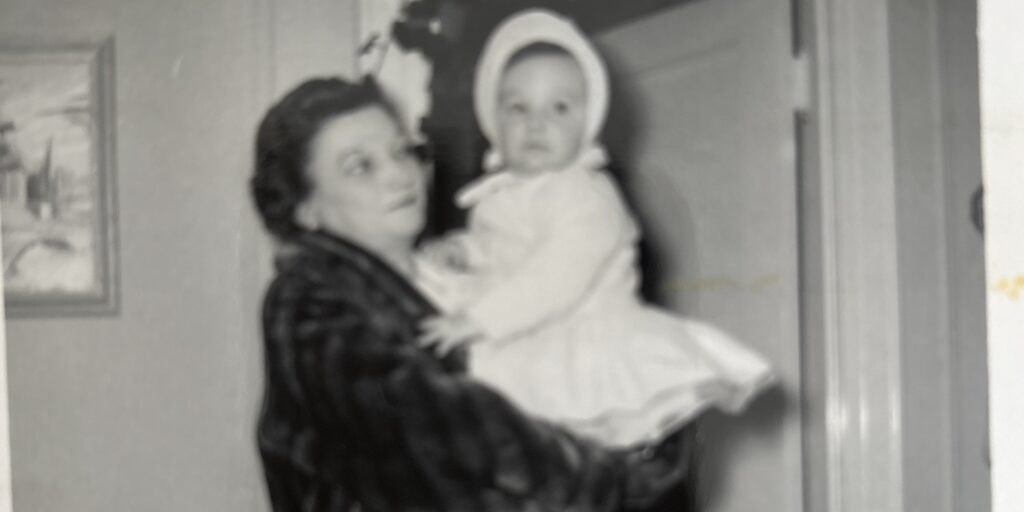
I come from a long line of unconventional women—none more so than my grandmother. When other women of the 1940s were married to their homes, my grandma did everything she could to get out of hers.
Grandma was the sole child of two incompatible parents. She married her own version of an inharmonious partner and had two children, one of whom was my mother. Grandma was the steady bread-winner of the family, serving sandwiches, donuts, coffee, and sodas from a food truck at an industrial park in Yonkers or making bread at Duvernoy Bakers for city restaurants. She was required to work holidays at the bakery, so she prepared a big meal for her family the day before. Mom invited her friend Elaine to that meal, while Elaine invited mom to her house the next day for their second holiday dinner.
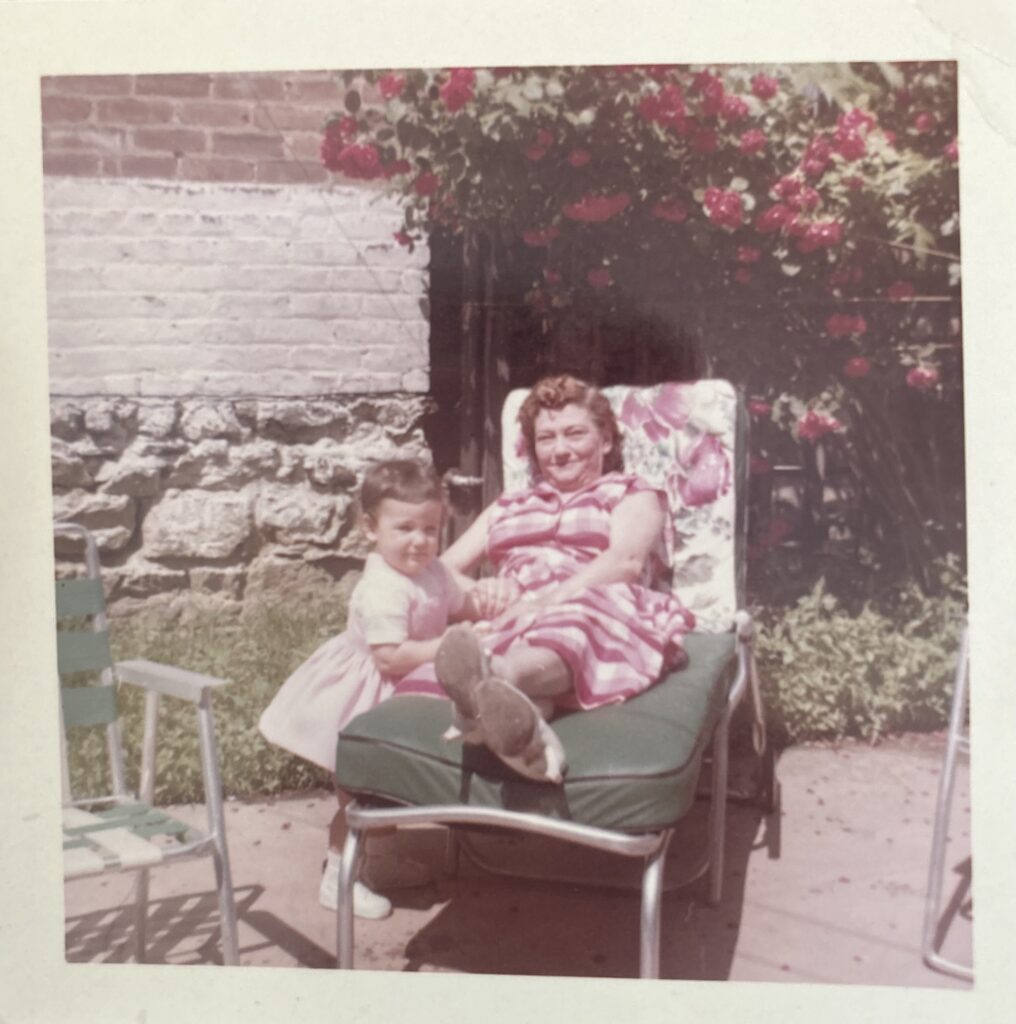
She dyed her hair red and used long clips to create waves, Roaring-Twenties-style. She sported high heels, dresses or skirts, and bright red lipstick. She read Ellery Queen paperbacks, attended local basketball games, and indoor car-racing events. She followed her beloved Dodgers until they left Brooklyn and defected to Los Angeles. She always hated the Yankees.
Grandma had a great sense of humor and was the life of most parties. One night she joined my mother and some of Mom’s high school friends at the bowling alley. After Grandma released the ball, the snap broke on her skirt. As the skirt began to fall past her hips, she caught it on the way down. She laughed; Mom’s friends laughed; those at the other lanes laughed. Mom told me, “She didn’t care. She just re-hooked it.” She attended a picnic with Mom and her friends once wearing shorts and her ever-present high-heels.
In Mom’s neighborhood, most people didn’t drive—not the men, and certainly not the women. The stores and churches were accessible on foot; the Alexander Carpet Shop, which employed most residents, was in walking distance; everything else could be gotten to by bus or subway. Grandma wanted to drive. One day she announced to my mom and my uncle that she was buying a new car. The three of them went to get the car at the home of the older woman who had kept the car in her garage—for years. Mom, eleven years old at the time, saw the car and said, “Oh, my God! I thought it was a new car!” Instead it was a Hupmobile which even in 1947 looked ancient to her. It was a four-door sedan, dark maroon with tasseled shades in the rear windows. It had wooden spokes and balloon tires with tubes inside. It was so massive that Grandma needed to put blocks on the pedals in order to reach them.
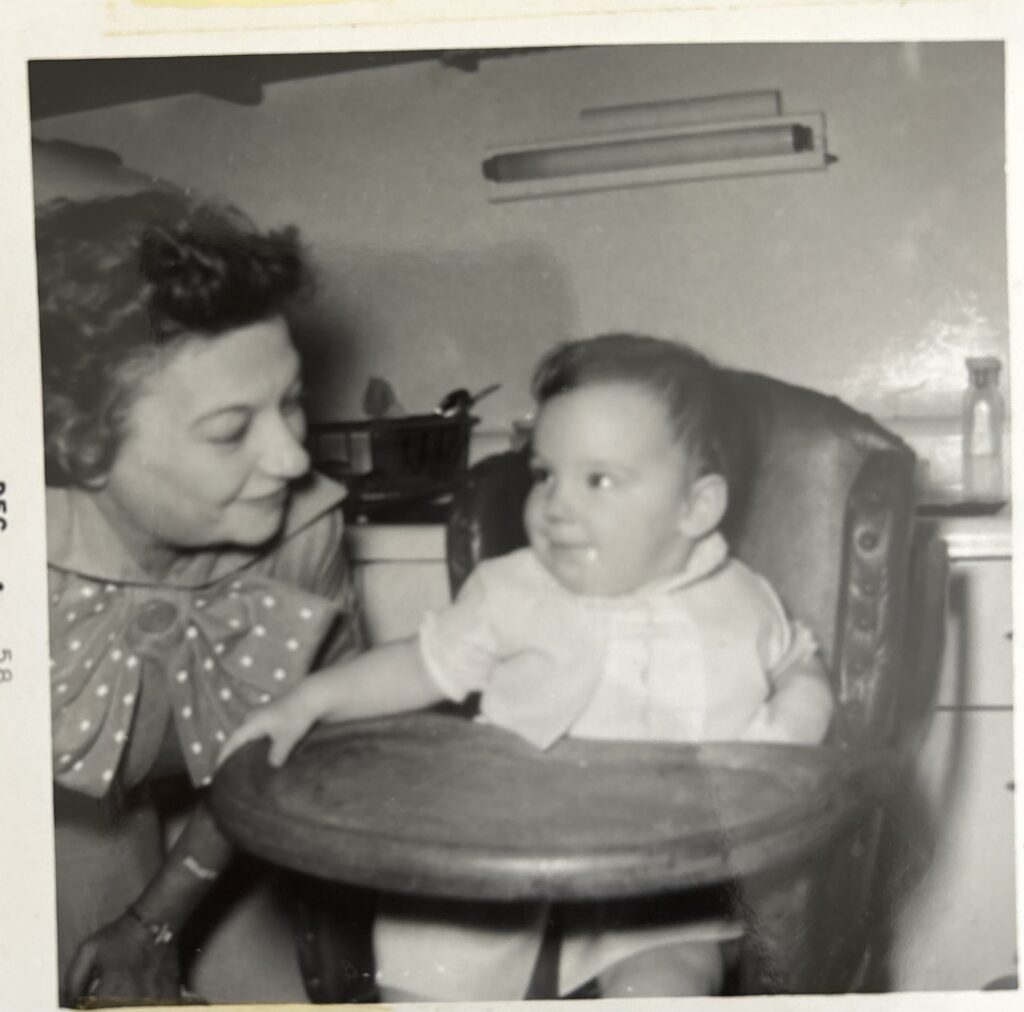
She was not deterred. Determined to get her license, she practiced on this beast of a car. When she went to her driver’s license appointment, the man who would be testing her asked, “Did you drive that car here?”
“Yes,” she answered.
“You passed!” he announced.
Grandma set in motion a legacy of forward-thinking women in our family. She went out when others stayed in. She spoke up when others remained quiet. I suppose she was thought to be an independent woman. It’s likely she had to be.