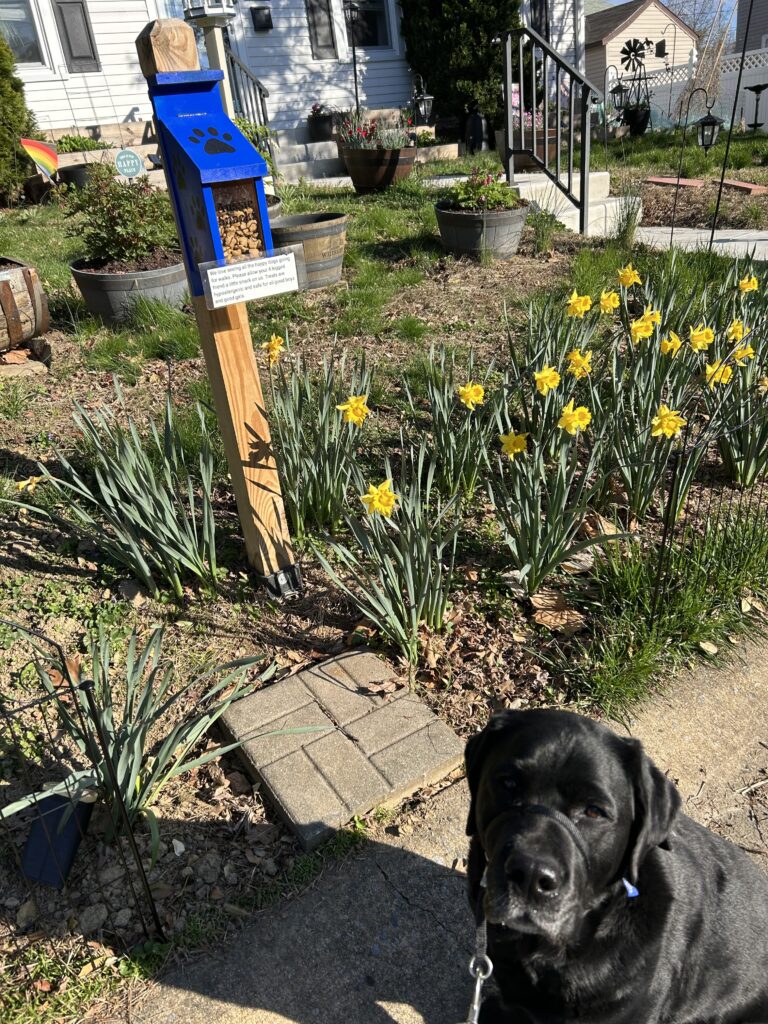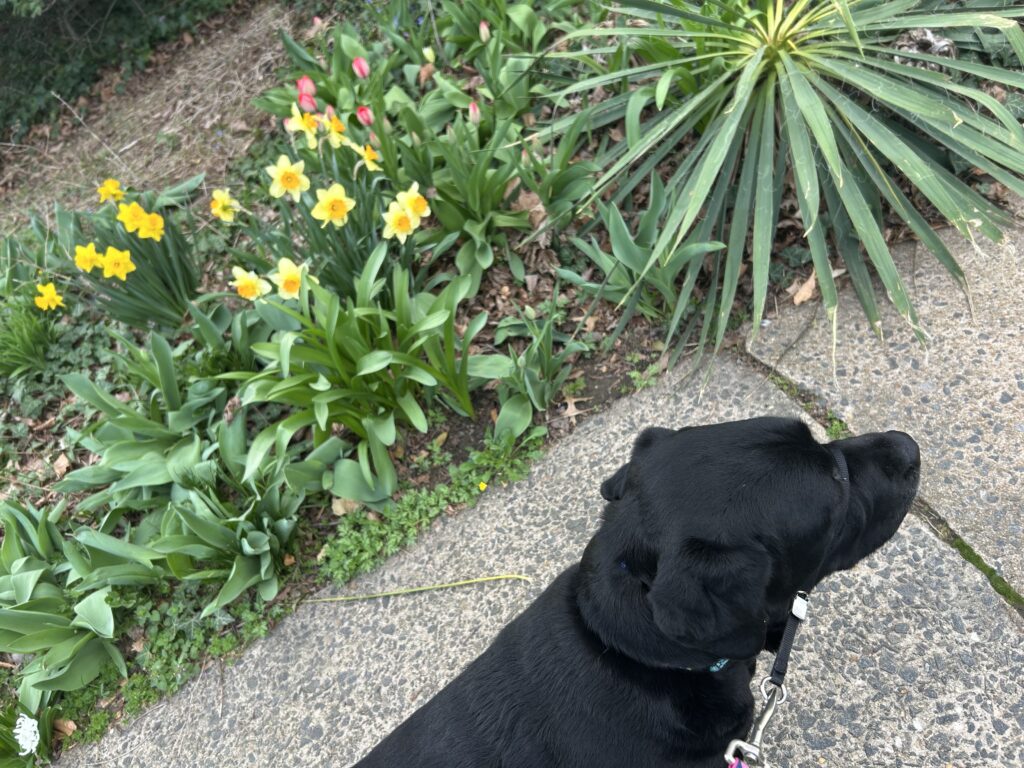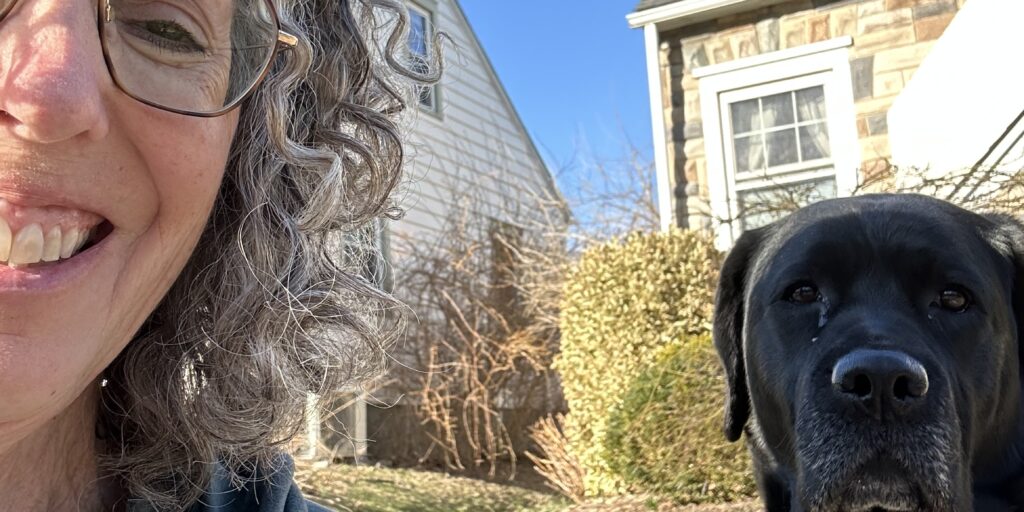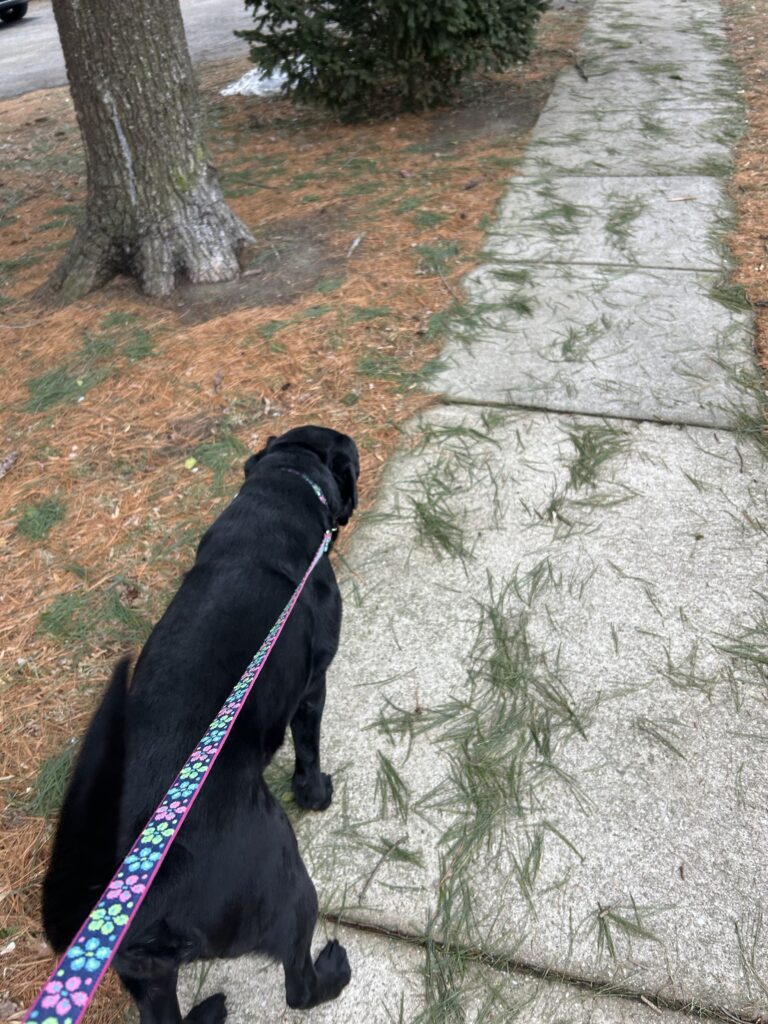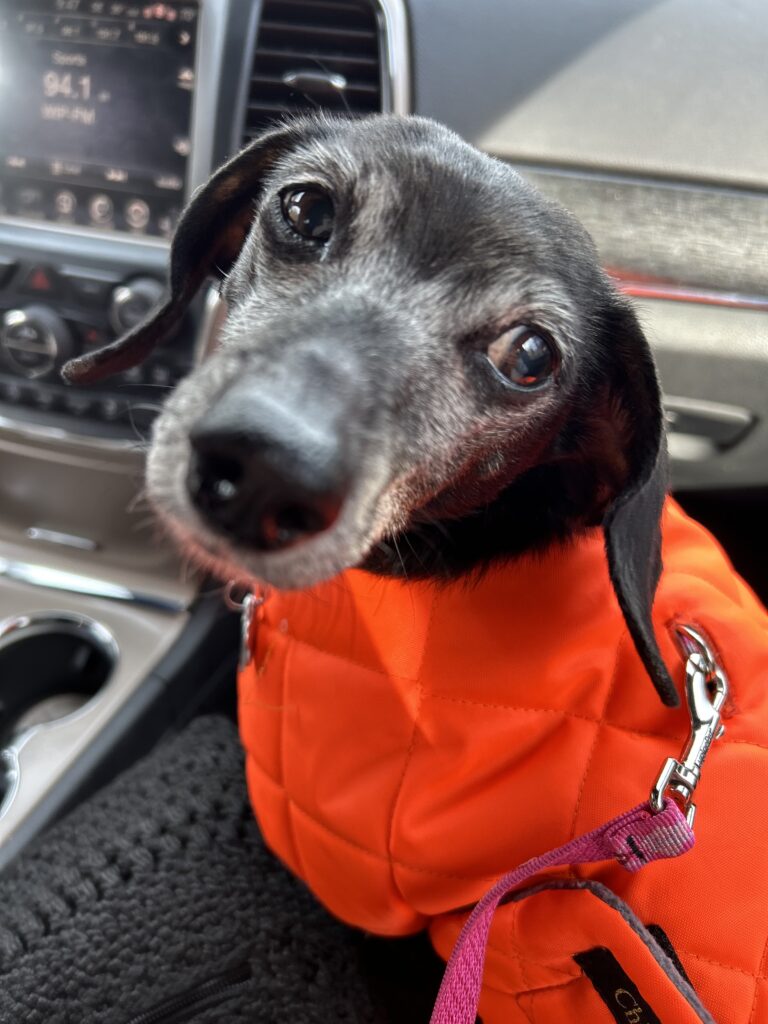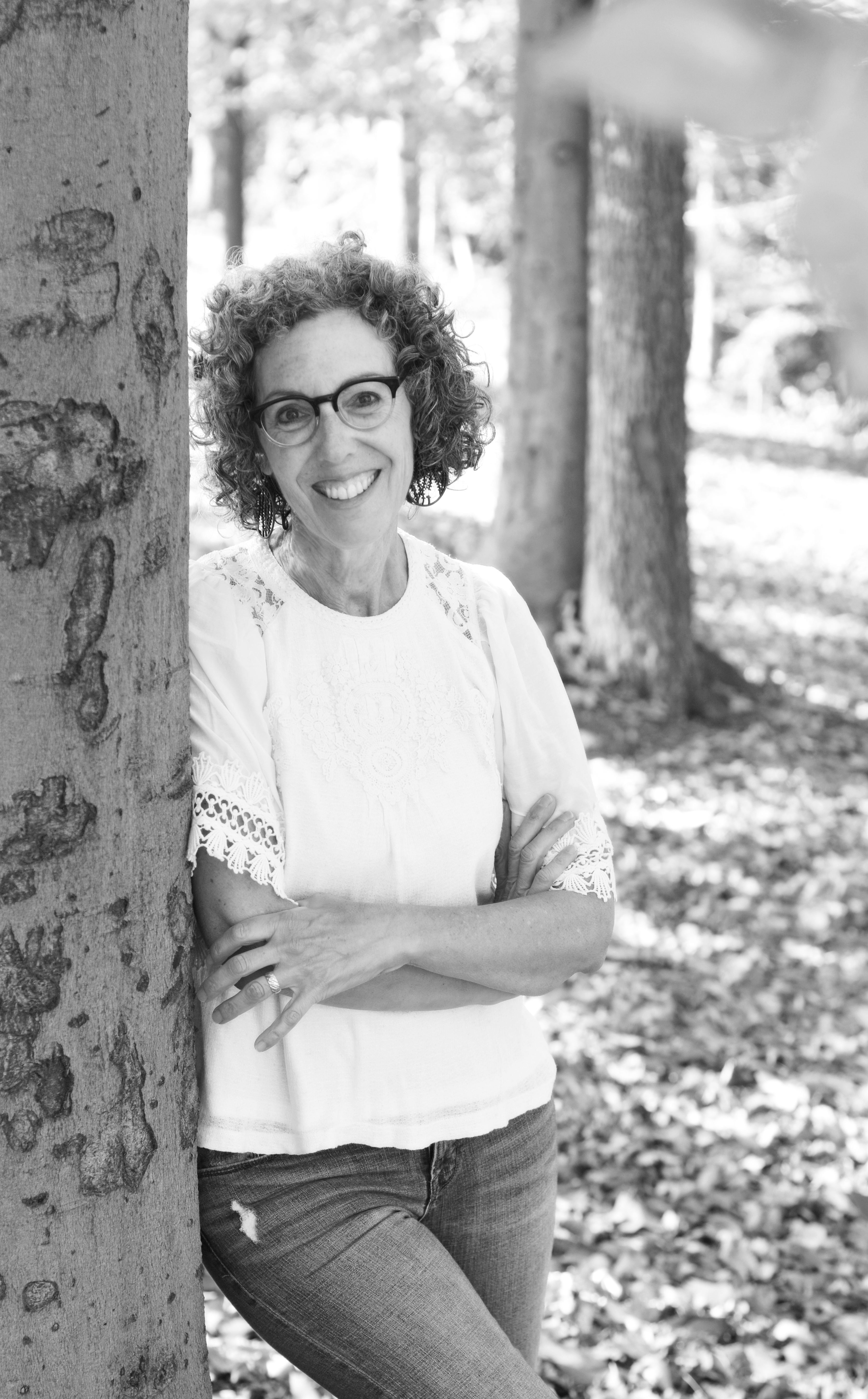
Franklin and I were making our way up the steep hill on our morning walk when a man pulled over to ask if I was a dog-walker. It was the first time we’d ever spoken, yet he said he has seen me walking daily, up and down, on various streets in town with different dogs. I explained that the three dogs belong to me and my family, and with no fenced-in yard, they require regular walking.
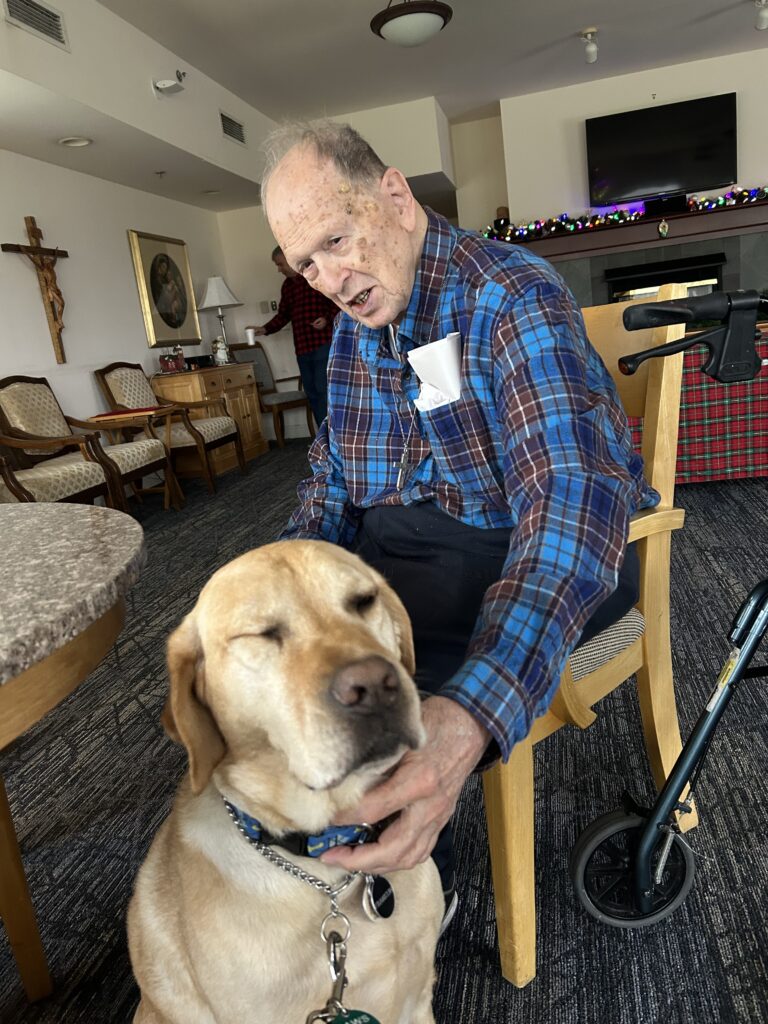
It is not uncommon for people to stop and comment on the dogs. Recently, Franklin and I have been visiting with a group of sixth-graders as they wait for the Number 36 bus at the corner. The kids gather around and pet him, even a boy previously afraid of dogs. When the bus arrived, that same boy said, “Oh, why does the bus have to be on time today?” Another said, “I’ll see you tomorrow.”
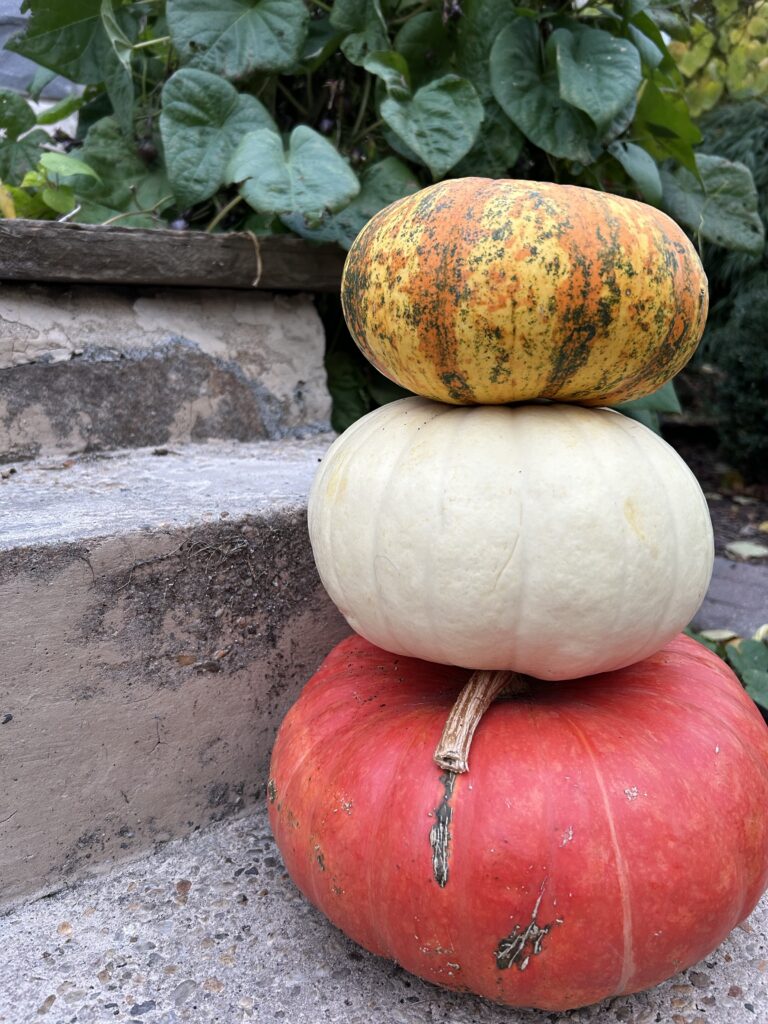
My dogs introduce me because people will stop to pet a dog. And, then the dog sits and we continue talking. Sometimes it’s a quick hello and a comment on the weather; other times it’s a wave when I sense they are in a hurry. I have been invited into a neighbor’s garden and given a butternut squash to carry home—provided I return the seeds.
Walking has become for me, more than a means of exercising my dogs. It has become a way of integrating my neighborhood. As I walk, I say, “I am here. I see you. I care.” I wave to the school bus drivers. The driver of Bus 29, who noticed I had been missing for a year while I was in treatment for leukemia, asks me how I am. And, I ask her about her route and the fact that she has to bid on it each year. I speak to the sanitation workers, thanking them for taking our trash, and for working so hard in all kinds of weather.
I speak to the family whose dog is receiving chemo, to another family whose dog passed from a brain tumor, to another acclimating to a rescue dog who had never been on a leash. I wave to a man who beeps his horn at me each morning as he drives his daughter to school. I don’t know his name. I know faces, and cars, and dogs. They know what time I walk, and I know when they leave for work. I see the children who graduate from infant seats to car seats to booster seats. I know because I am among them. I am their neighbor, and they are mine.
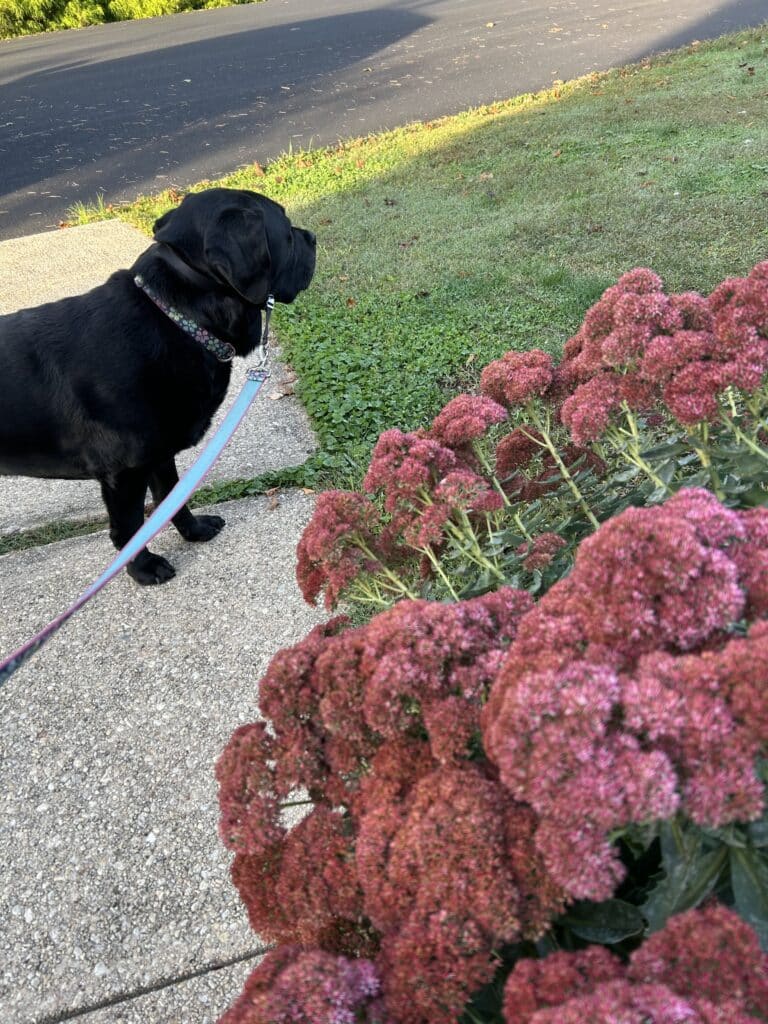

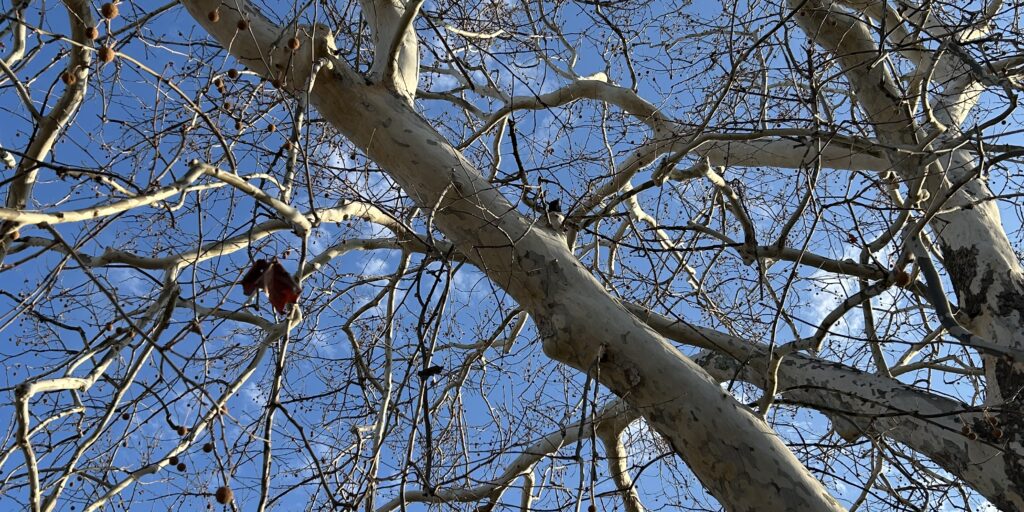
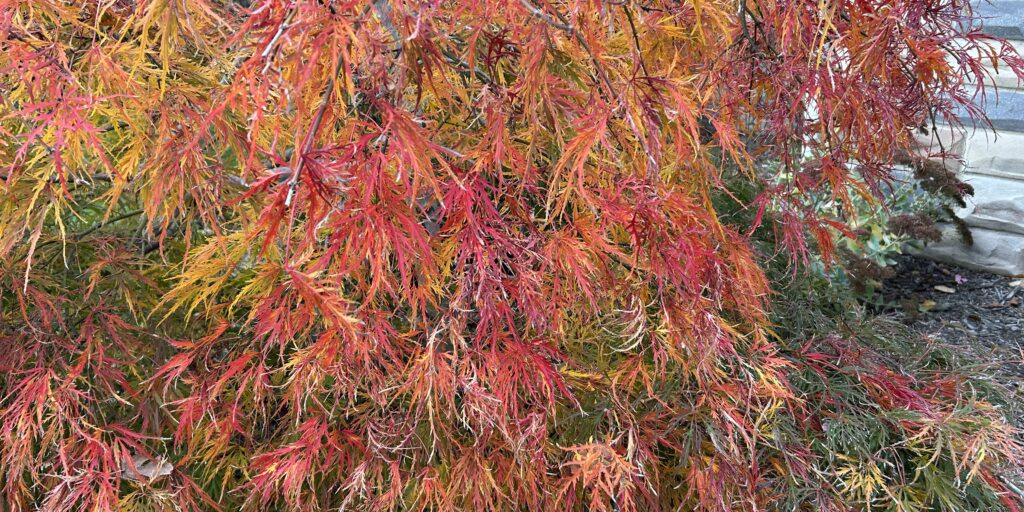
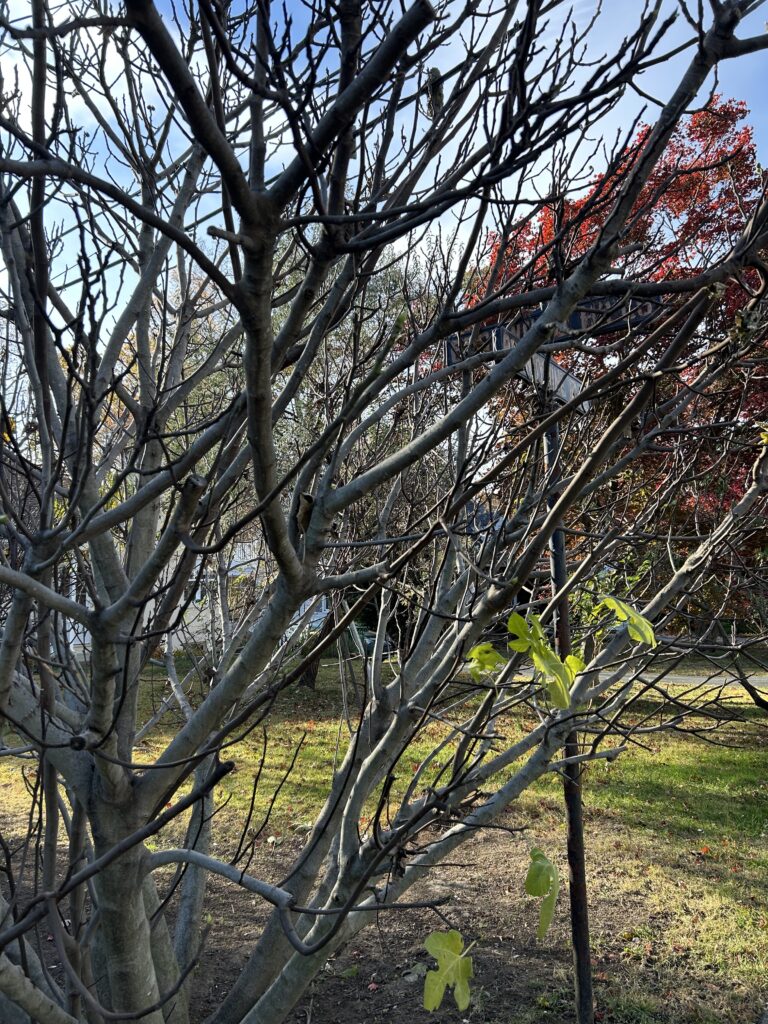
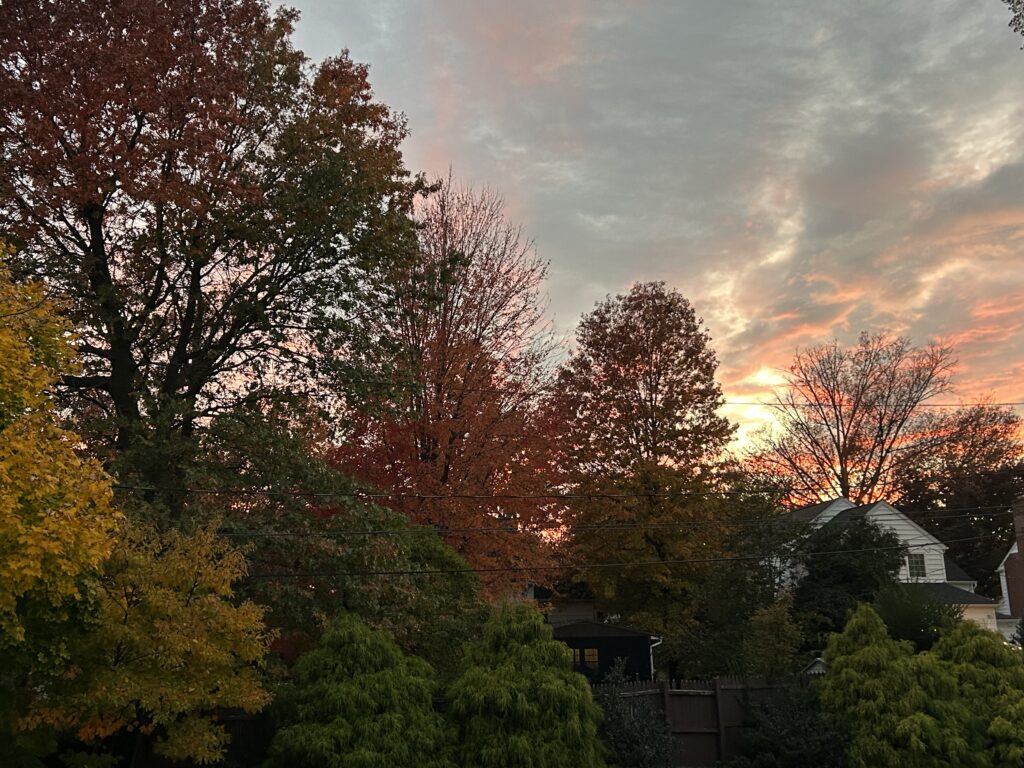
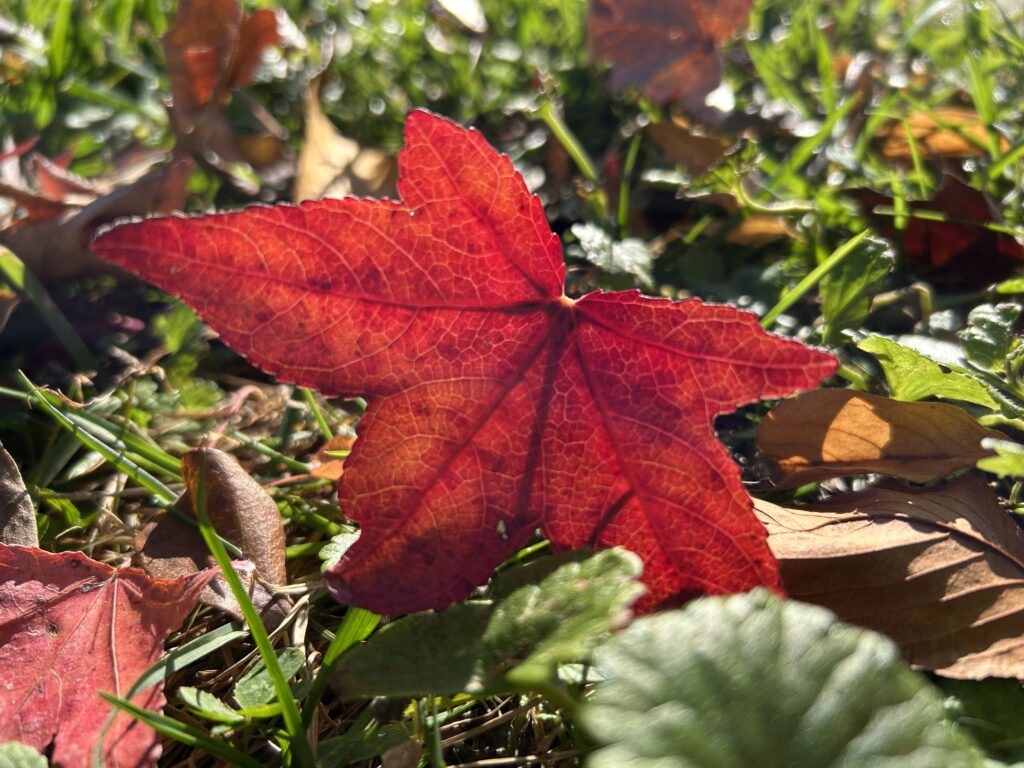
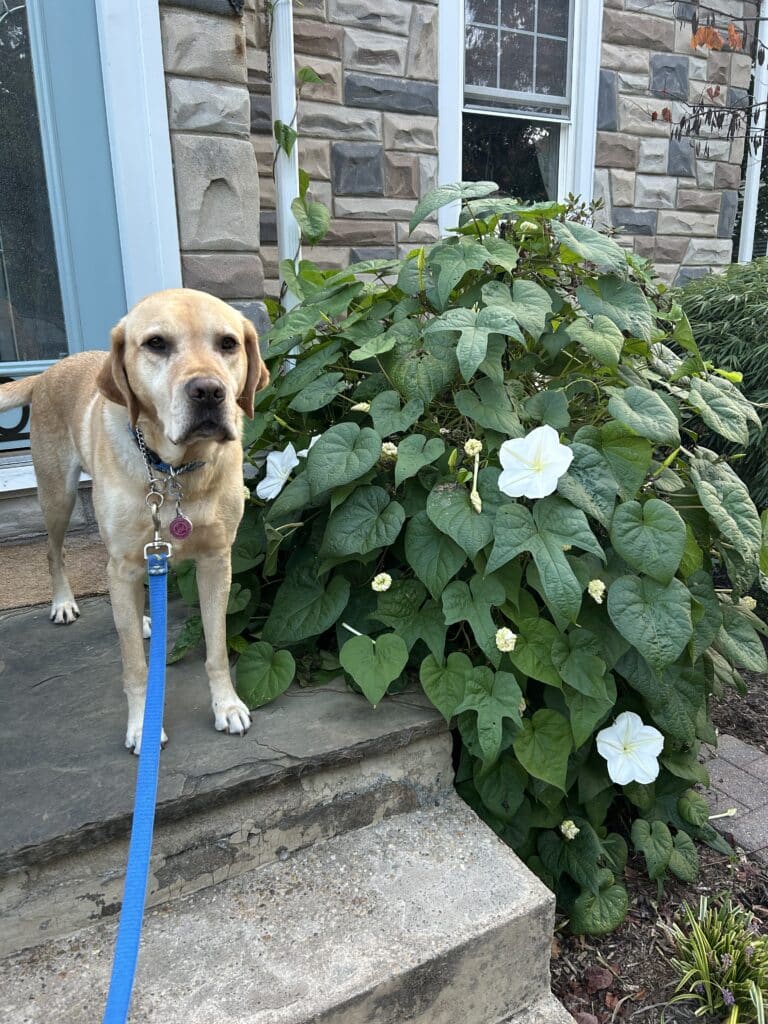
I did not set out to have these relationships. I simply stepped out of my door and began to walk. I am greeted by my moon flowers, the turning leaves, and cooler temperatures. Franklin waits for me on the step until I am ready to go. When it’s Ivy’s turn, she barrels ahead and does not look back when I call her name for a photo. Stella prefers not to pose, but she will do so if it means she can get back under the blanket more quickly.
None of the rest is planned. Each day is new. And, I am ready for it. Dogs and all.